



Quick Browse — Editor's Picks


Table of Contents
- How Big Is the US Nail Market in 2026?
- Online Sales Now Account for Over 40% of Beauty Purchases
- Press-On Nails: The Fastest-Growing Sub-Category
- What Shapes and Styles Are Selling
- Who Is Buying — And How Often
- The Outlook Through 2030
- Sources
How Big Is the US Nail Market in 2026?
The United States nail care market is projected to reach approximately $5.3 billion in 2026, according to Fortune Business Insights. That figure includes professional salon services, retail nail products, and the growing at-home care segment. The US accounts for roughly 79% of the North American nail care market and remains the single largest national market globally.

At the global level, the nail care industry is valued at approximately $26–27 billion in 2026, with multiple research firms converging on similar estimates. Research Nester places it at $26.1 billion; Fortune Business Insights at $27.03 billion; Morgan Reed Insights at $27.39 billion. The consistency across independent sources suggests the market sizing is reliable. Global growth rates cluster around 5–6% annually through the end of the decade.
Online Sales Now Account for Over 40% of Beauty Purchases
One of the most significant structural shifts in the nail care market is the migration to online purchasing. Research Nester projects that the online retail segment will capture 42.1% of nail care market share by 2035, and multiple industry analysts note that e-commerce already accounts for over 40% of beauty product sales in the US today.
This shift has been particularly favorable for direct-to-consumer brands. Unlike traditional salon supply chains — where products move from manufacturer to distributor to salon — DTC nail brands sell directly to the end consumer through their own websites and social media channels. This model reduces distribution friction, allows for more personalized marketing, and enables brands to build direct relationships with their customers. The rise of platforms like TikTok Shop and Instagram Shopping has further accelerated this trend.

Press-On Nails: The Fastest-Growing Sub-Category
Within the artificial nails market, press-on nails are the dominant and fastest-growing segment. According to Fortune Business Insights, press-ons held a 34% share of the global artificial nails market in 2026 — outpacing both wrap nails and traditional acrylic extensions. The broader artificial nails market itself is valued at $1.68 billion in 2026 and projected to reach $2.72 billion by 2034, growing at a 6.2% annual rate.
Zooming in on press-ons specifically, Grand View Research estimates the global press-on nails market at approximately $738 million in 2024, on track to surpass $1 billion by 2030 at a 6.5% compound annual growth rate. North America accounts for roughly 35% of global press-on sales. Online press-on sales are growing even faster — at 8.3% annually — reflecting the category's natural fit for e-commerce, where visual presentation and social media discovery drive purchasing decisions.
The growth is driven by several converging factors: improved product quality (better adhesives, more realistic designs, gel-based finishes), rising salon costs pushing consumers toward at-home alternatives, and social media amplifying nail art culture among younger demographics.

What Shapes and Styles Are Selling
Market data reveals clear preferences in shape. Square press-on nails accounted for 28% of market revenue in 2023, according to Grand View Research. However, the fastest-growing shape segment is coffin, expanding at a 7.7% annual rate through 2030 — driven by younger, trend-conscious consumers and the shape's popularity on social media.
In everyday sales, short oval, almond, and squoval shapes continue to lead, reflecting a consumer base that prioritizes wearability and comfort alongside style. For shoppers exploring these popular silhouettes, short press-on nails and squoval shapes are among the most practical entry points into the category.
On the style side, chrome finishes, cat eye magnetic effects, and velvet textures dominate trend-driven purchases, while French tips and solid neutrals remain the reliable volume sellers. The market is bifurcating into two lanes: "everyday basics" and "social media statement pieces" — and successful brands need both.
Who Is Buying — And How Often

Millennials and Gen Z are the primary volume drivers for press-on nails. These demographics allocate a growing share of discretionary spending to personal aesthetics, treat nails as a form of self-expression rather than routine grooming, and are comfortable purchasing beauty products online. According to multiple market analyses, frequent press-on users purchase between 6 and 12 sets per year.
Gen Alpha is emerging as an additional growth vector, with search traffic for press-on nails among teens and tweens up 17% year over year. While this younger demographic gravitates toward lower-priced, mass-market options, their early adoption of the press-on format is creating lifetime category users who will likely trade up to premium products as they age.
The male grooming segment, while still small, is also expanding. Multiple industry reports cite rising male interest in nail care services and gender-neutral nail designs as an emerging contributor to overall market growth. Celebrities and athletes normalizing groomed nails have accelerated this shift.
The Outlook Through 2030
The data points in a consistent direction: nail care is growing, the at-home segment is growing faster, and within at-home, press-on nails are growing fastest of all. The combination of better product quality, lower price per wear compared to salon visits, and seamless online discovery through social media creates a category with strong tailwinds through the end of the decade.
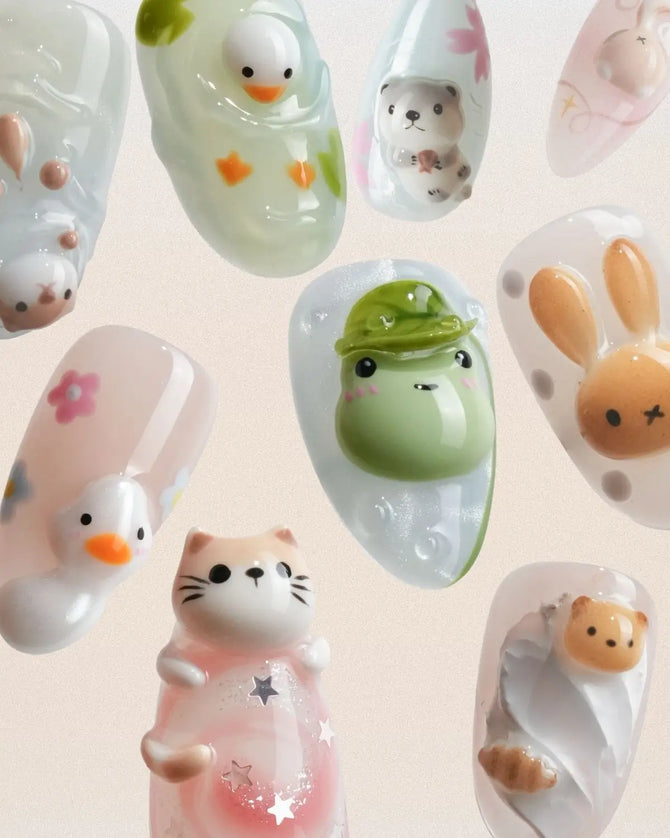
For consumers, the practical takeaway is that the press-on market is getting better — more options, better fit systems, higher-quality finishes — because more brands are competing for a rapidly expanding customer base. For anyone who tried press-ons five years ago and was underwhelmed, the category in 2026 looks very different. Handmade press-on nails, in particular, have pushed the ceiling on what at-home nails can look and feel like — with hand-painted artistry, real gel polish, and custom sizing that factory-made sets cannot match.

The US nail market's trajectory through 2030 will be shaped by how well brands balance accessibility with quality, trend responsiveness with evergreen appeal, and online discovery with product consistency. The brands that get this balance right will capture an outsized share of a market that shows no signs of slowing down.
Frequently Asked Questions
How big is the US nail care market in 2026?
The US nail care market is projected to reach approximately $5.3 billion in 2026, according to Fortune Business Insights. The US accounts for roughly 79% of the North American market and is the single largest national market for nail care products globally.
How fast is the press-on nail market growing?
The global press-on nails market is growing at a compound annual rate of 6.5%, from approximately $738 million in 2024 to a projected $1.08 billion by 2030, according to Grand View Research. Online press-on sales are growing even faster at 8.3% annually. Press-ons now hold a 34% share of the artificial nails market, making them the largest sub-category.
What nail shapes are most popular for press-on nails?
Square press-on nails accounted for 28% of market revenue in 2023. However, coffin shapes are the fastest-growing segment at 7.7% annually, driven by younger, trend-conscious consumers. In everyday sales, short oval, almond, and squoval shapes continue to lead due to their wearability and comfort.
Why are press-on nails growing faster than other nail products?
Several factors are converging: improved product quality (better adhesives, gel-based finishes, more realistic designs), rising salon costs pushing consumers toward at-home alternatives, social media amplifying nail art culture, and the expansion of e-commerce making press-ons easy to discover and purchase online. The category also benefits from low barrier to entry — press-ons require no special skills or equipment to apply.
What percentage of beauty sales happen online?
E-commerce now accounts for over 40% of beauty product sales in the US, according to multiple industry analyses. The online retail segment is projected to capture 42.1% of nail care market share by 2035. This shift particularly favors direct-to-consumer press-on nail brands that sell through their own websites and social media channels.
Related Articles
- Salon Costs Are Rising — And More People Are Doing Nails at Home
- Gen Alpha Is Driving the Press-On Nail Boom in 2026
- Spring 2026 Nail Trends: Cat Eye Goes Velvet, Chrome Gets Softer
Sources
- Fortune Business Insights — Nail Care Products Market Size and Forecast 2026–2034
- Fortune Business Insights — Artificial Nails Market Size and Forecast
- Grand View Research — Press-on Nails Market Size, Share and Trends Report
- Grand View Research — Press-on Nails Market to Reach $1.08 Billion by 2030
- Research Nester — Nail Care Market Size & Share, Growth Trends 2035
- Morgan Reed Insights — Nail Care Market Size and Forecast 2026–2035
- Technavio — Artificial Nails Market Growth Analysis 2026–2030
- Global Market Insights — Nail Care Products Market Size and Analysis 2034
- BusinessDojo — Nail Care Market Trends and Consumer Spending
- Coherent Market Insights — Nail Care Market Size and Trends
- The Business of Fashion — Inside Gen Alpha's Press-On Nail Obsession

