



Quick Browse — Editor's Picks


Yes — most quality press-on nails are reusable, and with the right method you can get 5 to 10 or more wears from a single set. But the number of times you can actually reuse press-on nails depends on something most guides gloss over: your adhesive method matters more than the nail itself. Adhesive tabs give the easiest reuse — just peel and re-stick. Nail glue holds longer but makes removal harder without the right tool. And solid UV gel glue offers both long wear and clean removal, though it only works on semi-transparent sets. Handmade gel press-ons with a durable top coat hold up far better across multiple wears than thin, factory-made alternatives — a point echoed by nail professionals in Vogue Scandinavia's press-on nail guide. At roughly $5–7 per wear, a reusable set costs less than a single salon fill.
How Many Times Can You Reuse Press-On Nails?
The honest answer is: it depends entirely on how you attach and remove them. Across community forums, the most common frustration is vague advice — "a few times" tells you nothing useful. Here are the actual numbers, broken down by adhesive method, based on typical wear patterns with proper care. With extra attention to gentle removal and thorough cleaning, many users push well beyond these ranges.
| Adhesive Method | Hold Time | Reuse Count | Removal Difficulty | Best For |
|---|---|---|---|---|
| Adhesive Tabs | 3–5 days | 5–10+ wears | Easy — peel off, roll residue | Frequent style-switchers, beginners |
| Nail Glue | 2–4 weeks | 3–5 wears | Moderate — needs soaking + e-file | Long-wear events, travel |
| Solid UV Gel Glue | 2–4 weeks | 5–8 wears | Moderate — peels off in one piece | Long wear + reuse (semi-transparent nails only) |
Two things determine where you land in those ranges: how gently you remove the nails and how thoroughly you clean them before the next wear. Rushing removal is the single fastest way to destroy a set — more on that below.
Why Your Adhesive Method Matters More Than the Nail Itself
Here is the counter-intuitive truth that most reuse guides miss: nail glue is not the enemy of reuse — the wrong removal method is. The internet is full of people who assume that using glue means their press-ons are single-use. In reality, the damage comes from soaking entire nails in acetone (which dissolves the plastic), prying them off with force (which cracks the base), or scraping residue with metal tools (which scratches the inner surface). With the right technique, glue-applied nails can be reused multiple times.
Adhesive Tabs — Easiest Reuse, Shortest Wear
Adhesive tabs are the gold standard for reuse. They hold for 3–5 days, and when it is time to remove, the tab peels away cleanly. Any residue left on the press-on can be rolled off with a manicure stick or your fingertip. The nail itself takes almost zero damage, which is why tab users consistently report the highest reuse counts. The trade-off is shorter wear time — tabs are not ideal if you need your nails to survive a week of dishes, gym sessions, and showers. For a full walkthrough of tab application, see our apply and remove guide.
Nail Glue — Longer Hold, Harder Cleanup
Nail glue gives you 2–4 weeks of rock-solid wear. The challenge comes at removal: dried glue bonds to the back of the press-on and must be cleaned off before the next application, or the nail will not sit flat and will pop off prematurely. The most effective cleanup method is a low-speed electric nail file (e-file) — it gently buffs away dried glue without damaging the nail surface. If you do not own an e-file, warm soapy water with a drop of oil will soften the residue enough to carefully scrape with a wooden manicure stick. What you should never do: soak the entire nail in pure acetone. Acetone dissolves ABS plastic and acrylic — a few minutes of full immersion can warp the shape and dull the finish permanently.
Solid UV Gel Glue — The Third Option Most Guides Ignore
Solid UV gel glue is the newest adhesive category, and it solves a problem the other two cannot: long wear plus easy reuse. After application, you cure it under a UV lamp for 60–120 seconds. The solidified gel creates a strong bond that lasts 2–4 weeks — and when you remove the nail, the cured gel often peels off the back in one piece, leaving the press-on virtually untouched. Joyee Nails offers this as Solid Nail Pro Glue in the accessories collection.
However, solid gel glue comes with a critical safety limitation. The UV light must penetrate through the press-on nail to fully cure the gel underneath. This means it only works reliably on nude, sheer, or semi-transparent press-on nails — like sets from our nude collection or French tip collection. On opaque, dark, or heavily decorated nails, UV cannot reach the center of the gel layer. The surface may feel hard, but the interior remains uncured — and uncured gel in prolonged contact with your nail bed can trigger a serious gel allergy or bacterial infection (greenies). This is not a theoretical risk: it is one of the most frequently reported problems in press-on nail communities. If your set is not semi-transparent, stick with tabs or glue.
How to Remove Press-On Nails Without Ruining Them
Gentle removal is the single most important factor in whether your nails survive for another wear. Rushing this step — peeling, forcing, twisting — is how sets get destroyed. The process is the same regardless of adhesive type: soften the bond first, then lift.
Step 1: Soak
Fill a bowl with warm water, add a few drops of dish soap and a drop of oil (olive oil, cuticle oil, or any carrier oil works). Soak your nails for 10–15 minutes. The soap breaks down the adhesive, and the oil helps the nail slide off rather than snap. For solid gel glue, spray a bit of rubbing alcohol into the loosened edges to help dissolve the bond.
Step 2: Lift Gently
Using a wooden manicure stick (never metal), find the edge where the press-on has started to lift and slide the stick underneath. Work slowly from one side to the other. If the nail resists, do not force it — re-soak for another 5 minutes and try again. Forcing a nail off is the number one cause of cracks and warped bases.
Step 3: Clean the Press-On
This is the step most people skip — and the reason their second wear fails. Remove all adhesive residue from the back of the nail before storing it. For tabs, roll the residue off with the manicure stick. For glue, use a low-speed e-file or gently buff with a fine nail file. For solid gel, lift and peel the cured gel layer with the manicure stick or cuticle nippers. A clean inner surface is essential for proper adhesion next time. Detailed removal steps for each method are in our removal guide.
Step 4: Clean Your Natural Nails
Before your next application, remove any glue or oil residue from your natural nails. Buff lightly with a nail file and wipe with an alcohol pad. Leftover residue is the most common reason press-ons do not stick as well the second time around. Our application guide covers full prep in detail.
How to Clean and Store Press-On Nails for Next Wear
Proper storage is what separates someone who gets 3 wears from someone who gets 10. After cleaning, inspect each nail for damage before putting it away.
Check for these before storing: no cracks or splits along the edges, a smooth inner surface with no residue bumps, the shape still matches your nail bed without gaps, and the finish is not excessively scratched or peeled. If a nail fails any of these checks, it is time to retire that piece — reusing a cracked or warped nail can trap moisture underneath and create conditions for bacterial growth.
Store your clean, dry nails back in the original box, sorted by finger. This prevents scratching between nails and keeps sizes organized for quick application next time. Avoid storing in direct sunlight or heat, which can cause warping over time. A simple rule: if the nails are dry, clean, and boxed, they are ready whenever you are.
What Makes a Press-On Nail Actually Reusable?
Every press-on brand claims to be "reusable," but material and construction determine whether that is marketing or reality. The difference comes down to three factors: base material, top coat quality, and design complexity.
Base material: Press-on nails are typically made from ABS plastic, soft gel, or thin acrylic film. ABS and quality gel bases are rigid enough to hold their shape through multiple removal cycles without bending or cracking. Thin acrylic film — the kind used in most drugstore press-ons under $10 — flexes easily and often warps on first removal. If a nail bends when you press it gently between your fingers, it is unlikely to survive more than one or two wears.
Top coat and finish: A durable gel top coat protects the design underneath from daily wear — scratching, chipping, and dulling. Handmade press-on nails from brands that use real gel polish and proper curing have finishes that stay glossy through multiple wears. Factory-applied painted finishes tend to chip and scratch faster, making the nails look worn even if the base is still intact. The cat eye collection is a good example — the magnetic gel finish is cured under UV and sealed, so the shimmer effect holds up across multiple applications.
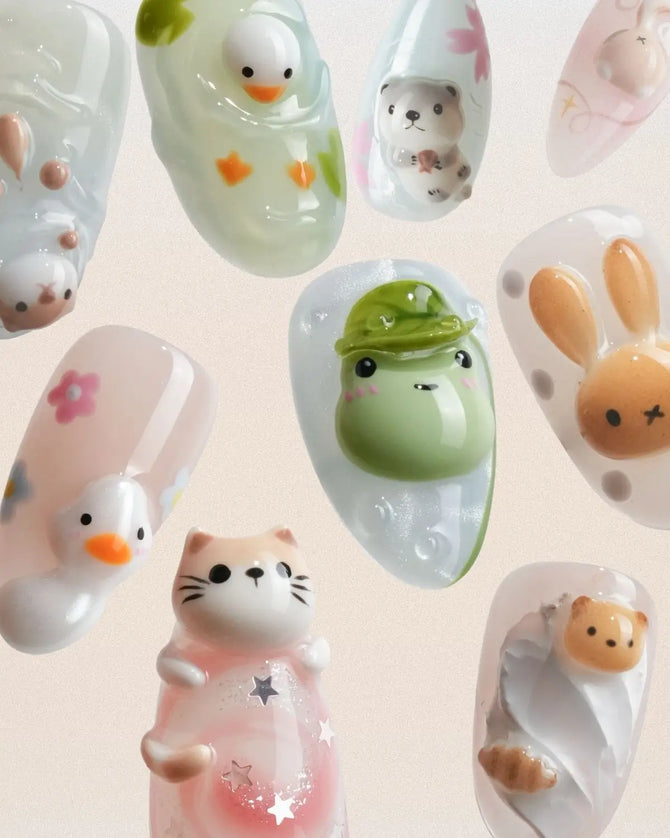
Design complexity: Simple, smooth designs — solid colors, glossy finishes, natural styles — are the most reusable because there are no raised elements to catch or break. 3D designs with sculpted flowers, bows, crystals, or pearls can absolutely be reused, but they require more careful handling — store them face-up, avoid stacking, and be extra gentle during removal. A 3D accent that snaps off does not ruin the entire nail, but it does change the design.
Joyee Nails sets are handmade by nail artists using real gel polish over hand-sculpted tips. Every set ships with adhesive tabs, nail glue, a file, and a manicure stick — so you have both adhesive options from day one. For fully custom sizing in any of 6 shapes and 4 lengths, see the custom press-on nails page.
Press-On Nails Cost Per Wear — The Math Most Guides Skip
Here is the counter-intuitive insight about reusable press-on nails: cheap nails are often the most expensive option. A $10 drugstore set that you wear once costs $10 per wear. A $35 handmade gel set that you wear 5 times costs $7 per wear — and with careful handling, that number drops further.
| Option | Cost | Typical Wears | Cost Per Wear |
|---|---|---|---|
| Salon gel manicure | $50–130+ | 1 | $50–130+ |
| Drugstore press-ons | $8–15 | 1–2 | $8–15 |
| Handmade gel press-ons (with tabs) | ~$35 | 5–10+ | $3.50–7 |
| Handmade gel press-ons (with glue) | ~$35 | 3–5 | $7–12 |
The real cost variable is not the nail price — it is the number of reuses. And the number of reuses is determined by your adhesive choice and removal technique. Investing in a quality set and using tabs for maximum reuse is the most cost-effective nail routine available. If you want to start with something simple and high-reuse, the solid color collection and everyday collection are designed for exactly this.
When Should You Stop Reusing a Set?
Reusable does not mean forever. Knowing when to retire a set is just as important as knowing how to reuse one. Here are the clear signs:
Visible cracks or splits: Any crack in the base — even a hairline one — creates a gap where moisture can collect. Moisture trapped between a press-on and your natural nail is the primary cause of bacterial nail infections (the dreaded "greenies"). If you see a crack, that nail is done.
Warped or bent base: A press-on that no longer sits flat against your nail bed will not adhere properly. Gaps mean air pockets, air pockets mean weak hold, and weak hold means the nail catches on things and pops off — potentially taking a layer of your natural nail with it.
Significant surface damage: Heavy scratching, peeling finish, or dulled gloss are cosmetic issues, not safety issues. But at some point the nail simply does not look good enough to wear again. A fresh top coat can sometimes extend the life of a lightly worn set, but it cannot fix deep scratches or peeling.
Green discoloration on your natural nail: If you notice any green tint on your actual nail after removing a press-on, stop reusing that entire set immediately and let your natural nails breathe. Green spots indicate pseudomonas bacteria — they are not dangerous in most cases but need air and time to grow out. If it persists or spreads, see a doctor.
As a general rule: when in doubt, retire the nail. A new set is always cheaper than dealing with a nail infection. For more on safe application and removal practices, visit our how to apply and remove page.
Frequently Asked Questions
Can you reuse press-on nails with glue?
Yes. The key is cleaning the dried glue off the back of the nail before reapplying. A low-speed electric nail file (e-file) is the most effective tool — it removes hardened glue without damaging the nail surface. If you do not have an e-file, soak the nail backs in warm soapy water to soften the residue, then gently scrape with a wooden stick. With glue, expect 3–5 reuses per set.
How do you get glue off press-on nails without acetone?
Soak the removed press-ons in warm water with dish soap and a few drops of oil for 10–15 minutes. This softens the glue enough to scrape it off with a wooden manicure stick. For stubborn spots, a fine nail file or e-file on low speed works well. Avoid soaking press-ons in pure acetone — it can dissolve the plastic base and ruin the finish.
Are gel press-on nails more reusable than acrylic?
Generally yes. Gel press-ons — especially handmade sets cured under UV — have a more durable and flexible finish than thin acrylic or plastic alternatives. The gel top coat resists scratching and chipping better, which means the nails look wearable for more cycles. The base material matters too: thicker ABS or gel bases hold their shape through multiple removals, while thin acrylic film tends to warp.
Do press-on nails damage your natural nails?
Not when applied and removed correctly. The damage people associate with press-ons almost always comes from improper removal — peeling, forcing, or using harsh chemicals. Soaking to loosen the bond and lifting gently with a wooden stick protects your natural nails completely. Adhesive tabs are the gentlest option. For a full safe-removal walkthrough, see our press-on nail care guide.
How long do adhesive tabs last?
Adhesive tabs typically hold for 3–5 days with proper application. The key to maximum hold is prep: clean and degrease your natural nails with an alcohol pad, press the tab firmly to eliminate air bubbles, and apply the press-on at a 45-degree angle from cuticle to tip, holding for at least 15 seconds. Avoid water and oils for the first hour after application.
Can you reuse 3D or embellished press-on nails?
Yes, but they require more careful handling. 3D elements like sculpted flowers, bows, and crystals are securely attached with gel, but they can catch on clothing or towels if you are not careful during daily wear. During removal, take extra care not to put pressure on raised elements. Store 3D nails face-up in their box rather than stacking them. With gentle handling, 3D sets can be reused just as many times as flat designs.
Related Articles
- How to Apply Press-On Nails — Step-by-Step Guide
- How to Remove Press-On Nails Without Damage
- How to Make Press-On Nails Last Longer
- Press-On Nails vs Acrylics — Which Is Better?
- Press-On Nail Size Guide
- Green Nail Designs — The Right Shade for Your Skin Tone, Season, and Style
- Purple Nail Designs — How to Pick the Right Shade, Finish, and Pairing

